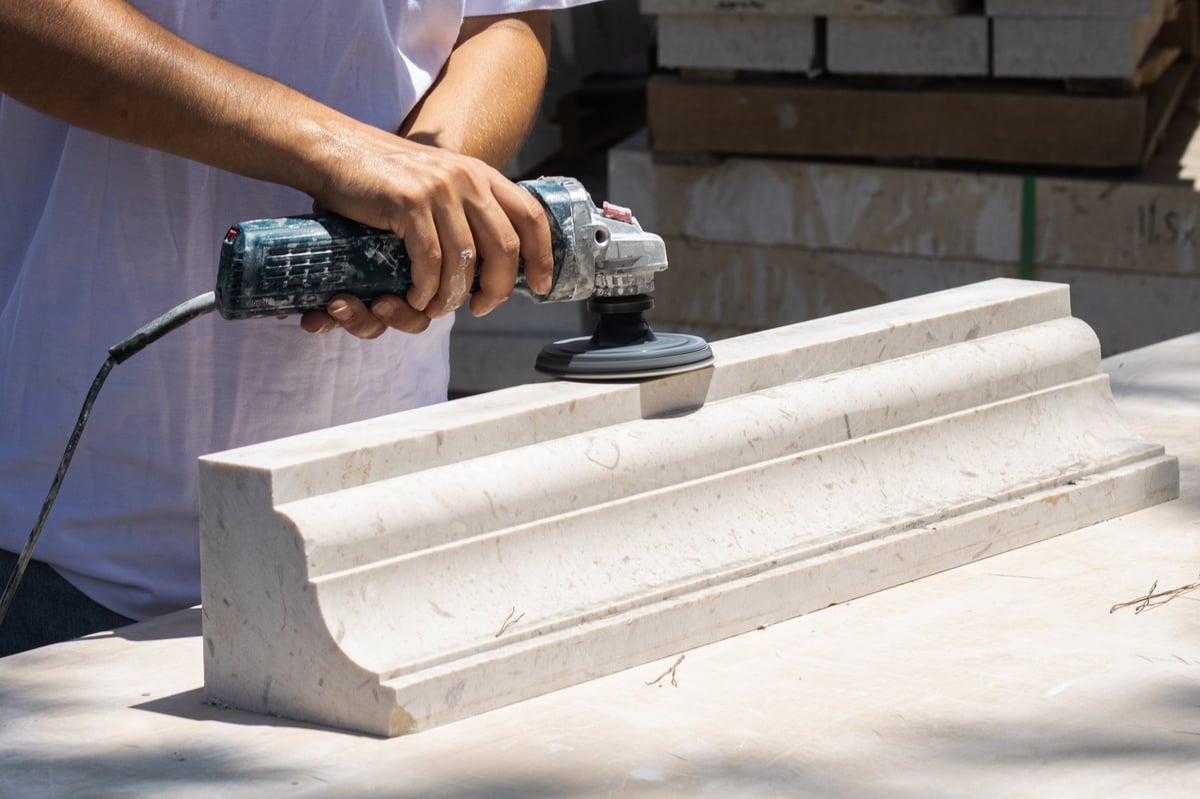
Honing grinds away the worn, etched, and scratched top layer of marble to reveal a smooth, perfectly flat surface — finished in a timeless matte or satin sheen. It's the ideal choice for high-traffic floors, and the essential foundation before polishing for a high-gloss finish.
Matte & Satin Finishes
Smooth, low-sheen, practical
Removes Etching & Scratches
Grinds away surface damage
5.0 Rated
On Google Reviews
If you're not using Marbleblu, you're not getting the highest quality.
This is one of the most common questions we hear. The difference comes down to how the surface is finished — and each look serves a different lifestyle.
Busy floor areas, homes with kids and pets, commercial lobbies, or when you prefer a modern matte aesthetic. Honing also repairs stone and can be left matte or polished further.
Honing is always the step before polishing. To get a high-gloss finish, the stone must first be honed flat and smooth — then polished to a shine.
Countertops, vanities, and accent surfaces where you want maximum elegance and a reflective, high-end look.
Honing is skillful work — it's about removing exactly the right amount of stone to get a perfectly flat, even surface with a consistent sheen.
The surface is cleaned and inspected to identify the abrasive grit needed and any areas of deeper damage.
Coarse diamond pads grind down the surface, removing etches, scratches, and old dull finish to a flat, level plane.
Progressively finer diamond pads refine the surface to the desired matte or satin smoothness.
The final honed finish is achieved, and optional sealing protects the surface and simplifies upkeep.
The most common honed surface
Modern matte kitchen surfaces
Non-slip, easy-care tile & walls
Honed tops & surrounds
We'll assess your marble and recommend the right finish for your home or business — honest advice, free of charge.